
If you love big, friendly, and loyal dogs, there are plenty of large dog breeds that can make wonderful companions. Large dogs are often known for their affectionate personalities, intelligence, protective nature, and strong bond with their families. However, choosing the right large dog requires more than simply picking the breed you find cutest.
The best large dog breeds have different exercise requirements, grooming needs, temperaments, and living-space preferences. Some are energetic and need hours of daily activity, while others are calm and happy to relax at home with their families.
In this guide, we’ll look at 15 popular large dog breeds and explain what makes each one special, along with important things to consider before bringing a large dog home.
What Is Considered a Large Dog?

There is no single universal definition of a large dog. Generally, dogs weighing around 50 pounds or more are considered large, while dogs over 75 or 80 pounds are often classified as giant breeds.
Large dogs can vary significantly in personality and energy level. A Great Dane may be enormous but relatively relaxed, while a Border Collie-sized working breed can be much more active despite weighing considerably less.
When choosing a large dog, consider:
- Adult weight and height
- Energy level
- Exercise requirements
- Temperament
- Grooming needs
- Training requirements
- Health considerations
- Space available at home
- Compatibility with children and other pets
15 Best Large Dog Breeds
1. Labrador Retriever
The Labrador Retriever is one of the most popular family dogs in the United States. Labs are friendly, intelligent, playful, and highly trainable.
They typically weigh around 55–80 pounds and have an athletic build. Labrador Retrievers are particularly well suited to active families because they enjoy walking, hiking, swimming, retrieving games, and other outdoor activities.
Best for: Active families, first-time dog owners, homes with children
Temperament: Friendly, outgoing, affectionate, intelligent
Exercise needs: High
Labs can be energetic when young, so regular exercise and training are important.
2. Golden Retriever
Golden Retrievers are another excellent choice for families looking for a large, affectionate dog. They are known for their gentle personalities and eagerness to please.
Goldens generally weigh around 55–75 pounds. They enjoy playing, walking, swimming, and spending time with their owners.
Their intelligence also makes them relatively easy to train, especially when positive reinforcement is used.
Best for: Families, children, active households
Temperament: Friendly, gentle, loyal, social
Exercise needs: Moderate to high
Golden Retrievers do shed regularly, so consistent brushing is important.
3. German Shepherd
The German Shepherd is a highly intelligent and versatile large dog breed. German Shepherds are commonly used as working, service, police, military, and family dogs.
They typically weigh around 50–90 pounds. They are loyal and protective but require proper socialization and training from an early age.
Best for: Active and experienced dog owners
Temperament: Loyal, intelligent, protective, confident
Exercise needs: High
A German Shepherd needs both physical exercise and mental stimulation to stay happy.
4. Rottweiler
Rottweilers are powerful, confident dogs that can form extremely strong bonds with their families. Despite their intimidating appearance, well-socialized Rottweilers can be affectionate and calm with their owners.
Adult Rottweilers commonly weigh between 80 and 135 pounds.
Because of their strength and protective instincts, early training and socialization are particularly important.
Best for: Experienced owners and active families
Temperament: Loyal, confident, protective
Exercise needs: Moderate to high
Responsible training helps a Rottweiler become a well-mannered family companion.
5. Great Dane
The Great Dane is famous for its enormous size and gentle personality. Often called a “gentle giant,” this breed can be surprisingly calm and affectionate.
Some Great Danes can stand over 30 inches tall at the shoulder.
Despite their size, they don’t necessarily require extremely intense exercise. However, they still need regular walks and age-appropriate activity.
Best for: Families with enough indoor space
Temperament: Gentle, friendly, affectionate
Exercise needs: Moderate
Because of their size, Great Danes require appropriately sized beds, crates, food bowls, and other supplies.
6. Bernese Mountain Dog
The Bernese Mountain Dog is a large working breed originally developed in Switzerland. It has a beautiful long coat, distinctive markings, and a generally gentle temperament.
Bernese Mountain Dogs are affectionate and often enjoy being part of family activities.
Best for: Families, cooler climates, homes with space
Temperament: Gentle, affectionate, loyal
Exercise needs: Moderate
Their thick coat requires regular brushing, especially during shedding seasons.
7. Newfoundland
Newfoundlands are enormous dogs known for their calm personalities and love of water. They were originally developed as working dogs and are famous for their swimming ability.
They can weigh well over 100 pounds and have thick, water-resistant coats.
Best for: Families with plenty of space
Temperament: Gentle, patient, affectionate
Exercise needs: Moderate
Newfoundlands shed heavily and can drool considerably, so owners should be prepared for regular grooming and cleanup.
8. Siberian Husky
Although not as massive as some giant breeds, the Siberian Husky is a medium-to-large athletic dog known for its striking appearance and high energy.
Huskies are intelligent, social, and independent. They require plenty of exercise and mental stimulation.
Best for: Active owners
Temperament: Energetic, social, independent
Exercise needs: Very high
Huskies can be challenging for inexperienced owners because they are energetic and may be skilled escape artists.
9. Alaskan Malamute
The Alaskan Malamute is a powerful northern breed originally developed for pulling heavy loads. It is larger and generally more powerful than the Siberian Husky.
Malamutes are loyal and affectionate but require substantial exercise and consistent training.
Best for: Experienced, active owners
Temperament: Loyal, affectionate, independent
Exercise needs: Very high
Their thick double coat also requires regular grooming.
10. Doberman Pinscher
Doberman Pinschers are athletic, intelligent, alert, and loyal dogs. They can make excellent companions for owners who are prepared to provide training, exercise, and socialization.
They typically weigh around 60–100 pounds.
Best for: Active and experienced owners
Temperament: Intelligent, loyal, alert, protective
Exercise needs: High
Dobermans thrive when they have a job to do or regular opportunities for mental stimulation.
11. Boxer
Boxers are energetic, playful dogs that often retain a puppy-like personality well into adulthood.
They generally weigh around 50–80 pounds and are known for their athletic bodies and expressive faces.
Best for: Active families
Temperament: Playful, affectionate, energetic
Exercise needs: High
Boxers can be excellent family dogs when properly trained and socialized.
12. Standard Poodle
The Standard Poodle is often underestimated because of its elegant appearance. In reality, it is an athletic, intelligent, and highly trainable large dog.
Standard Poodles generally weigh around 40–70 pounds and are capable of participating in activities such as hiking, swimming, obedience training, and dog sports.
Best for: Active families and owners who enjoy training
Temperament: Intelligent, active, affectionate
Exercise needs: Moderate to high
Their curly coat requires regular professional or at-home grooming.
13. Australian Shepherd
The Australian Shepherd is a highly intelligent and energetic herding breed. Although many Aussies are smaller than giant breeds, they are often considered medium-to-large dogs.
They are known for their intelligence, athleticism, and strong work ethic.
Best for: Active families and experienced owners
Temperament: Intelligent, energetic, loyal
Exercise needs: Very high
Without enough physical and mental stimulation, an Australian Shepherd may become bored and develop unwanted behaviors.
14. Saint Bernard
Saint Bernards are famous giant dogs with gentle, friendly personalities. They can weigh well over 100 pounds and require plenty of space.
They can be affectionate family companions when properly trained and socialized.
Best for: Families with large homes
Temperament: Gentle, friendly, patient
Exercise needs: Moderate
Owners should be prepared for shedding and drooling.
15. Akita
The Akita is a powerful Japanese breed known for its loyalty and independent personality. Akitas can form strong bonds with their families but may be reserved around strangers.
They generally require confident handling, early socialization, and consistent training.
Best for: Experienced dog owners
Temperament: Loyal, independent, dignified
Exercise needs: Moderate
An Akita may not be the ideal choice for every household, particularly for inexperienced owners or homes with certain other pets.
How to Choose the Best Large Dog Breed for Your Family
The best large dog breed isn’t necessarily the biggest or most popular breed. It should match your lifestyle.
Consider Your Activity Level

If you enjoy hiking, running, or outdoor adventures, an active breed such as a Labrador Retriever, German Shepherd, Siberian Husky, or Australian Shepherd may be a good match.
If you prefer a calmer lifestyle, a Great Dane or Saint Bernard may be worth considering, although every individual dog is different.
Consider Your Living Space
Large dogs need enough room to move comfortably. However, having a huge house isn’t always necessary. Some large dogs can adapt to smaller homes if they receive adequate exercise.
The key is matching the dog’s energy level with your ability to provide daily activity.
Think About Grooming
Large dogs can require significant grooming.
Breeds with thick or long coats, such as:
- Bernese Mountain Dogs
- Newfoundlands
- Siberian Huskies
- Alaskan Malamutes
- Saint Bernards
may require frequent brushing and more cleanup around the home.
Consider Training Requirements
Every large dog should receive basic obedience training. Because of their size and strength, good manners are especially important.
Teaching commands such as sit, stay, come, leave it, and loose-leash walking can make everyday life much easier.
Consider Children
Many large breeds can be wonderful with children when properly socialized and supervised. However, even friendly dogs can accidentally knock over a small child because of their size.
Children should always be taught how to interact respectfully with dogs.
Are Large Dogs Good Family Pets?
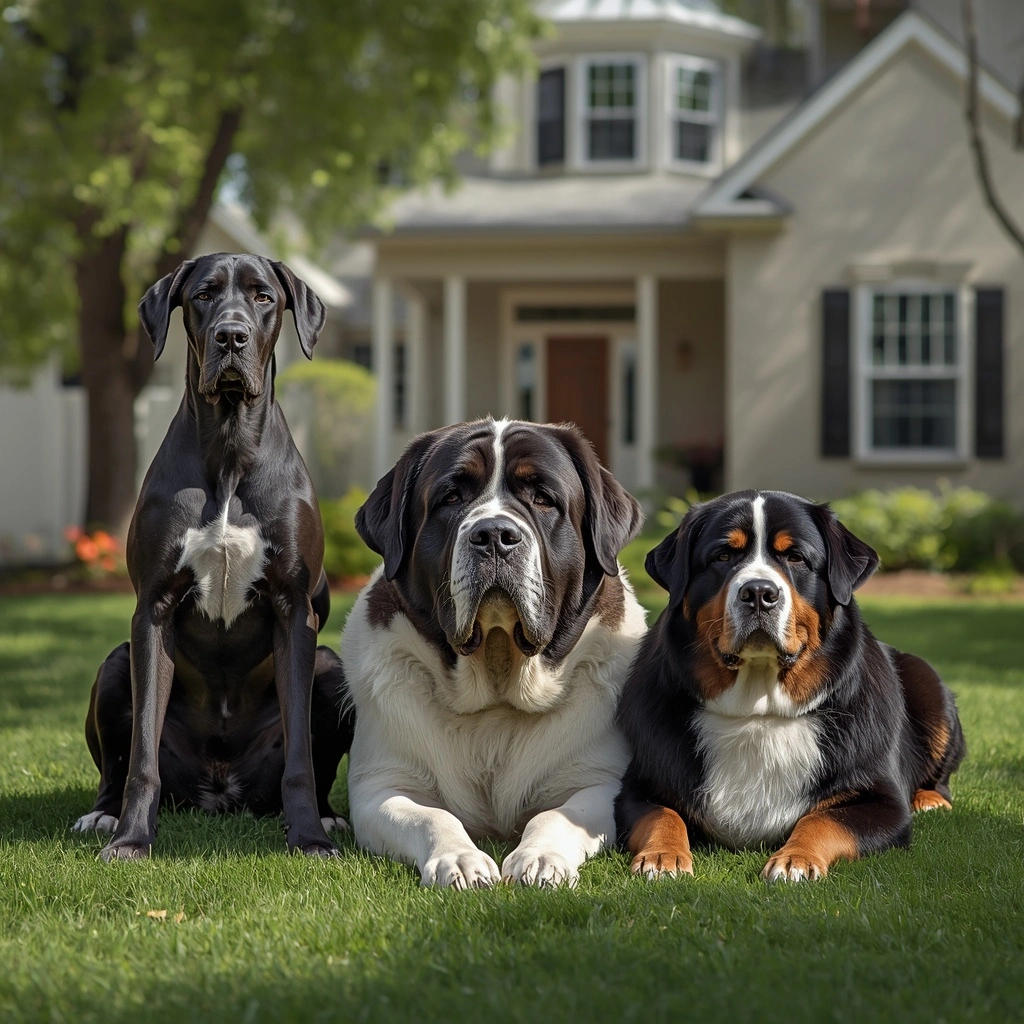
Yes, many large dog breeds can make excellent family pets.
Labrador Retrievers, Golden Retrievers, Bernese Mountain Dogs, Newfoundlands, and some Great Danes are often appreciated for their affectionate and family-oriented personalities.
However, breed alone doesn’t determine behavior. Genetics, early socialization, training, environment, health, and individual personality all matter.
Parents should supervise interactions between children and dogs, especially when the dog is large or energetic.
Are Large Dogs Expensive to Own?
Large dogs can cost more to maintain than smaller dogs.
They typically eat more food and may require larger beds, crates, collars, harnesses, toys, and other supplies. Veterinary expenses can also be higher because medication doses and some treatments are based on body weight.
Before adopting a large dog, consider the long-term costs of:
- Quality dog food
- Veterinary care
- Preventive medications
- Grooming
- Training
- Pet insurance
- Toys and supplies
- Emergency care
Large Dog Health Considerations
Large and giant breeds can be more prone to certain health problems, including joint issues and orthopedic conditions. Some giant breeds may also be at increased risk for bloat, also known as gastric dilatation-volvulus (GDV).
Regular veterinary checkups can help identify potential problems early.
Owners should also follow their veterinarian’s recommendations for nutrition, exercise, weight management, and preventive care.
Final Thoughts
The best large dog breeds offer an incredible combination of loyalty, companionship, intelligence, and affection. From the friendly Labrador Retriever and Golden Retriever to the gentle Great Dane and Newfoundland, there is a large breed for many different lifestyles.
Before choosing a dog, consider its adult size, energy level, temperament, grooming requirements, training needs, and potential health concerns. Most importantly, choose a breed that fits your lifestyle rather than choosing based only on appearance.
With proper training, socialization, exercise, nutrition, and veterinary care, a large dog can become a loving and rewarding member of your family for many years.
Previous Article Link Here.